Selected work / 02 · Railway station operations
MulticodeStations
From a station diagram to a clearly scoped wagon movement.
I designed Multicode Stations from scratch as the sole UX/UI designer. The web product connects the track layout, wagon records and a repositioning workflow, so the spatial view and operational details belong to the same task.
- Role
- Sole UX/UI designer
- Company
- Smart System Technologies / Multicode
- Starting point
- New product
- Platform
- Web application
Selected prototype walkthrough
29 secondsThe challenge
Station staff work with two kinds of information at once: the physical arrangement of tracks and wagons, and the records needed to describe an operation. A diagram is useful for locating a group. A registry is better for checking identifiers, counts, weight and timing.
The design challenge was to connect these views without making the person rebuild the selection or lose sight of what an action affects. Repositioning also needs a precise destination and time; selecting a wagon group is only the start of the task.
My role & approach
I designed the track diagram, wagon registry and repositioning workflow myself. I treated locating wagons, selecting the affected group, entering movement details and reviewing the operation as one sequence, with each step carrying the context from the previous one.
The same repositioning form can be opened from the diagram or registry. It retains the selected wagons alongside the destination, track end, actual time and note before confirmation.
Key UX decisions
Two views for two kinds of question. The track diagram provides the station layout. The expandable registry exposes the group and individual wagon records. Keeping both within the wagon-operations workspace gives people a way to change the level of detail without changing the task. Inspect the wagon registry
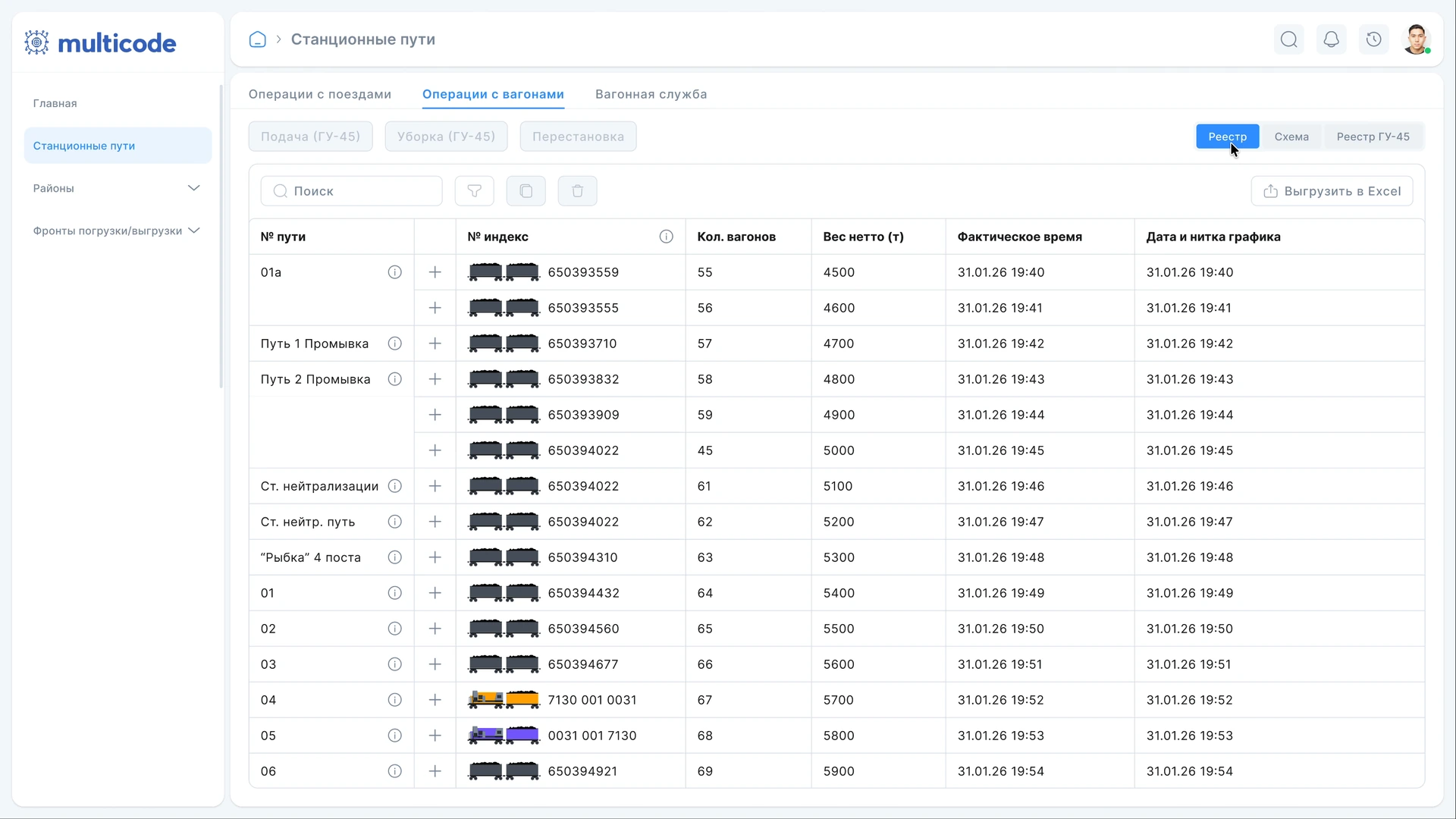
Carry the selection into the action. The repositioning form retains the affected-wagon list. People can review which records are included alongside the destination settings, instead of relying on memory from the previous screen. Inspect the repositioning form
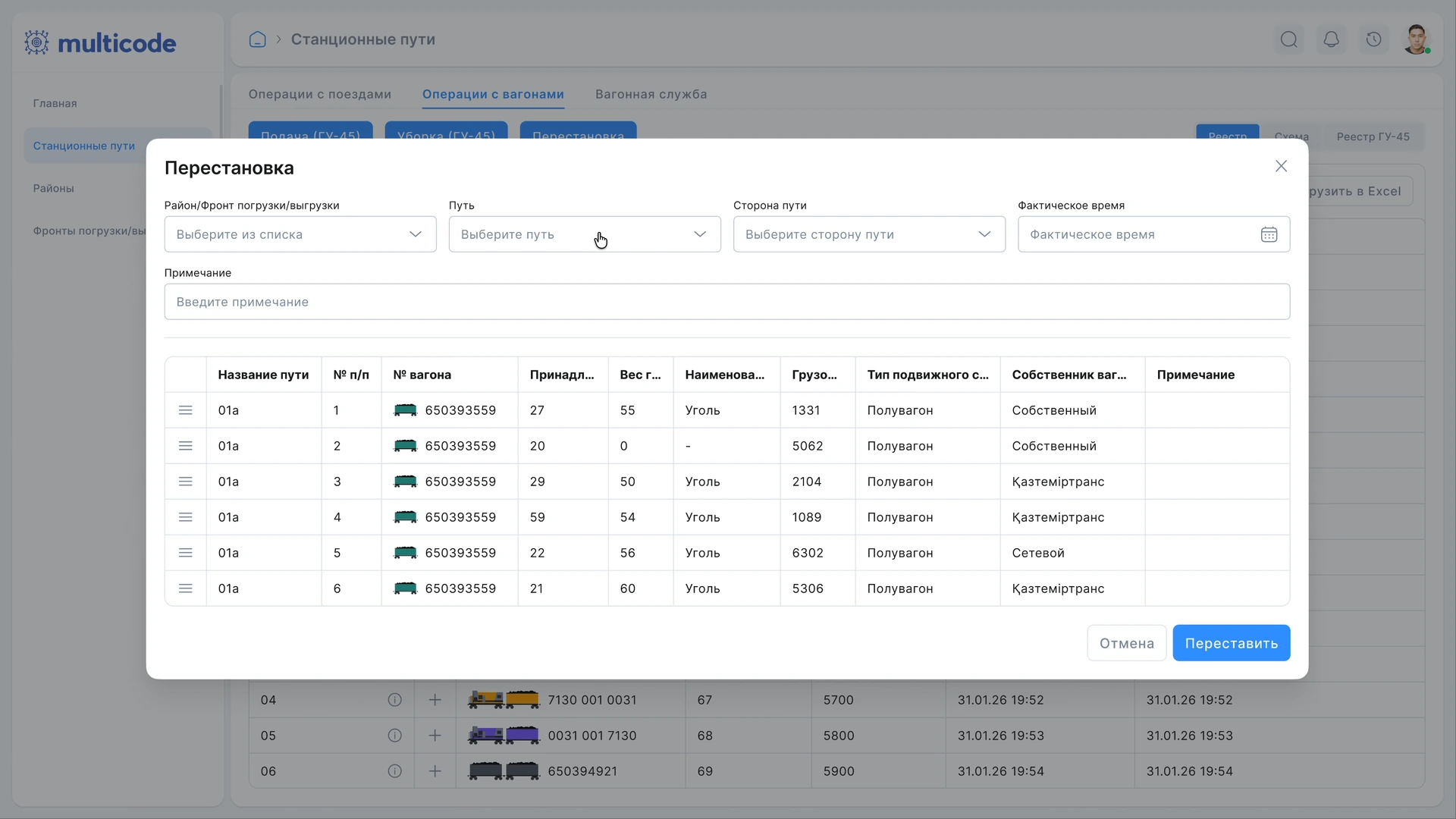
Describe the destination precisely. The form distinguishes the destination area, track and track end, with an actual-time field and a note. These are separate pieces of operational context, so they remain explicit rather than becoming a single ambiguous destination label.
Separate preparation from confirmation. The recorded flow includes a review step before completion. That creates a deliberate point to check the selected wagons and movement details after editing. The same repositioning flow can be opened from the diagram or registry.
Outcome
The result shown here is a connected prototype for reviewing and recording wagon movements. The design keeps the spatial context, affected records and destination together through the final confirmation.
Multicode Stations is presented separately from the fleet-management and KTT work because it serves a different working context: operations within a station. The walkthrough demonstrates the interface sequence, not the execution of a live railway movement.