Selected work / 05 · Super app & CMS
VLifeSuper app & CMS
Designing both sides of a consumer service: the app and the CMS behind it.
I spent two years on VLife, a Kazakhstani super app, working across its mobile app, store-management CMS and internal projects. My responsibility grew from working alongside a senior designer to independently designing service sections.
- Role
- Product designer
- Employment period
- 2020–2021
- Scope
- Mobile app, CMS & internal projects
- Contribution
- Research, interfaces & components
Selected app flows
41 secondsSelected CMS flows
8 secondsThe challenge
The version I worked on brought shopping, travel, car services, health, leisure and finance into one app, connected by a shared loyalty programme. People should be able to recognise a familiar structure while completing tasks that differ substantially between services.
The management side had a different emphasis. Store staff need to prepare a warehouse and delivery method, review many products and edit detailed records. Applying the consumer app’s layout directly to those tasks would overlook the density and comparison work a CMS requires.
My role & approach
During the first six months, I worked with a senior designer on the home screen, VLife Club and marketplace. After the senior designer left, I became the sole designer for the remaining service areas, working with their separate development teams and product leadership.
I studied established product patterns and adapted them to VLife’s services. For the restaurant module, we visited venues and conducted in-depth interviews. My work also included a reusable component library, questionnaires, A/B testing and design reviews. I discussed requirements and trade-offs with the product and development teams and reviewed implementation as the designs took shape.
Key UX decisions
Give a broad product a recognisable entry point. The home and service categories provide routes into distinct everyday tasks. Shared components and recurring interaction patterns carry continuity between those areas, rather than making every service feel like a separate app.
Reuse the foundation, adapt the journey. A product search, a flight selection and a loyalty profile need different information. My independent work on the later service areas used the common library as a starting point while retaining the details each task requires.
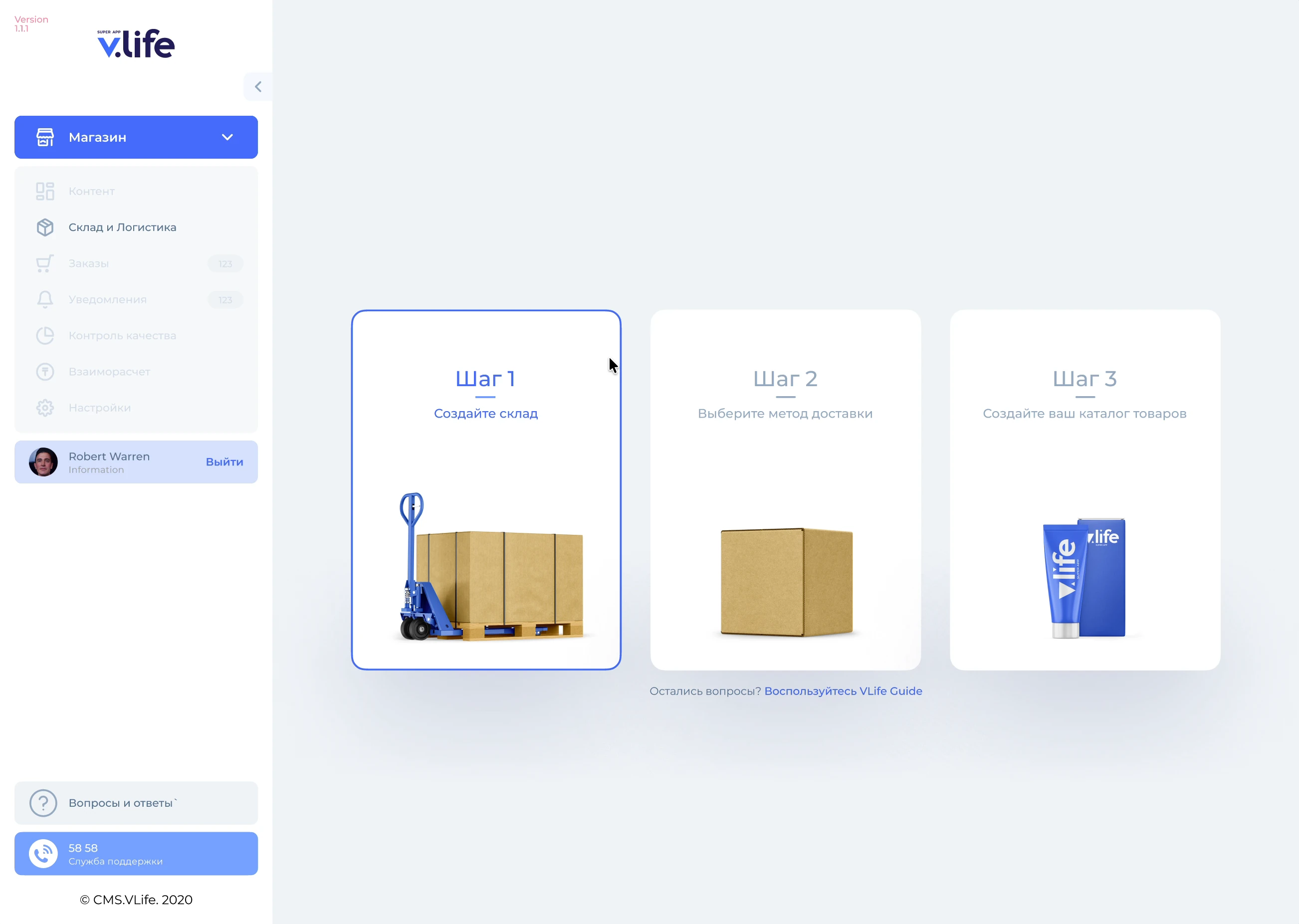
Make store preparation a sequence. The CMS begins with a checklist for warehouse creation, delivery setup and the product catalog. It makes the starting tasks explicit before the operator reaches the ongoing work of maintaining products. View the setup checklist
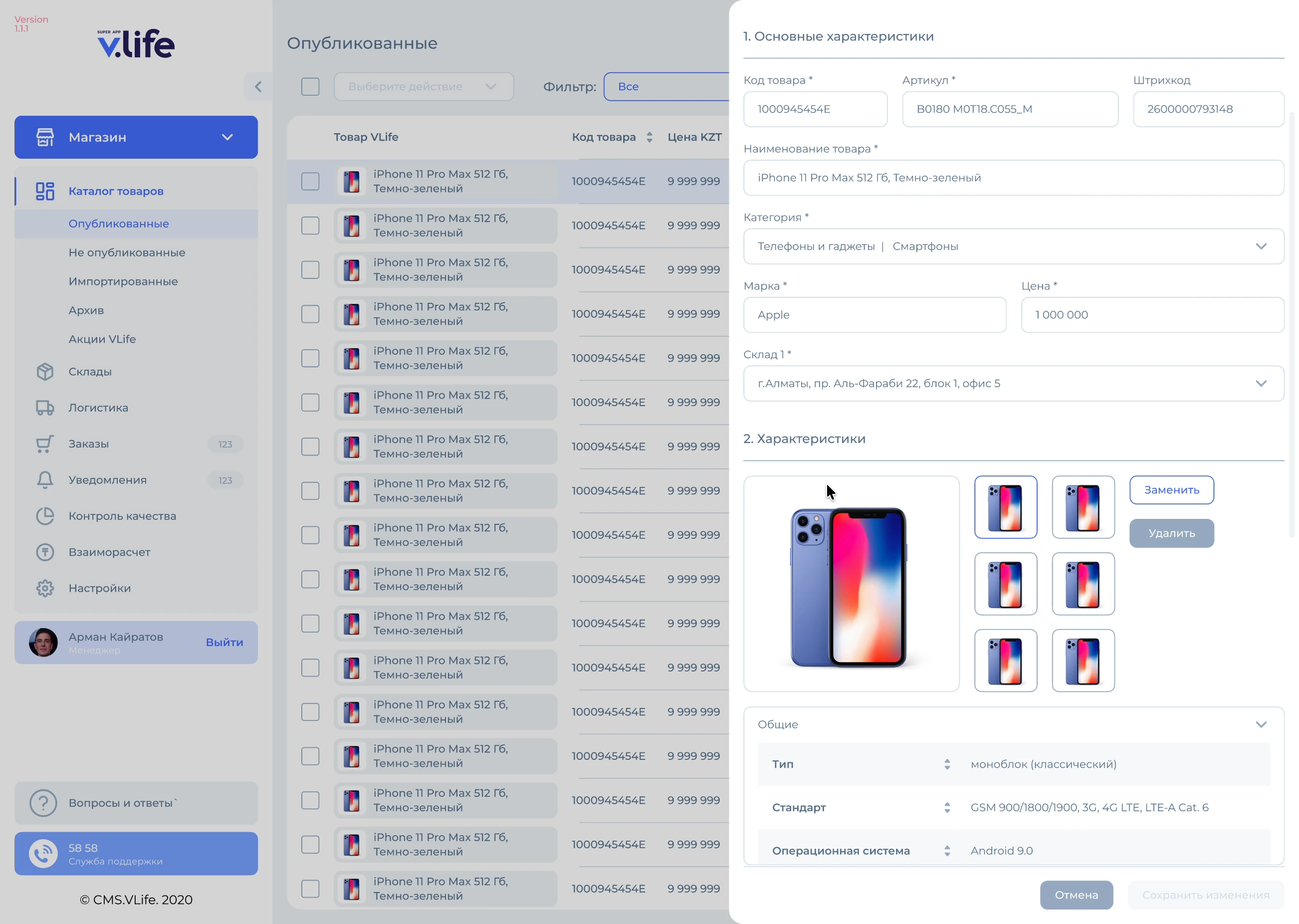
Keep catalog editing in context. Search, filters and a structured table support review across products. An editor opens in a side panel while the catalog stays visible behind it. Inside the panel, basic information, prices, images and specifications are grouped, so a dense record can be handled in smaller parts. View the product editor
Outcome
VLife expanded my responsibility from individual flows to connected product areas and collaboration with multiple development teams. The combined case shows that growth through the consumer app, its shared interface patterns and the operational CMS.
The work represents the product during my engagement. VLife has since evolved; its current public website focuses on fuel, charging, payments and partner rewards. That current positioning is separate from the historical designs shown here.